


Where the Mountains Remember
Updated: Apr 8
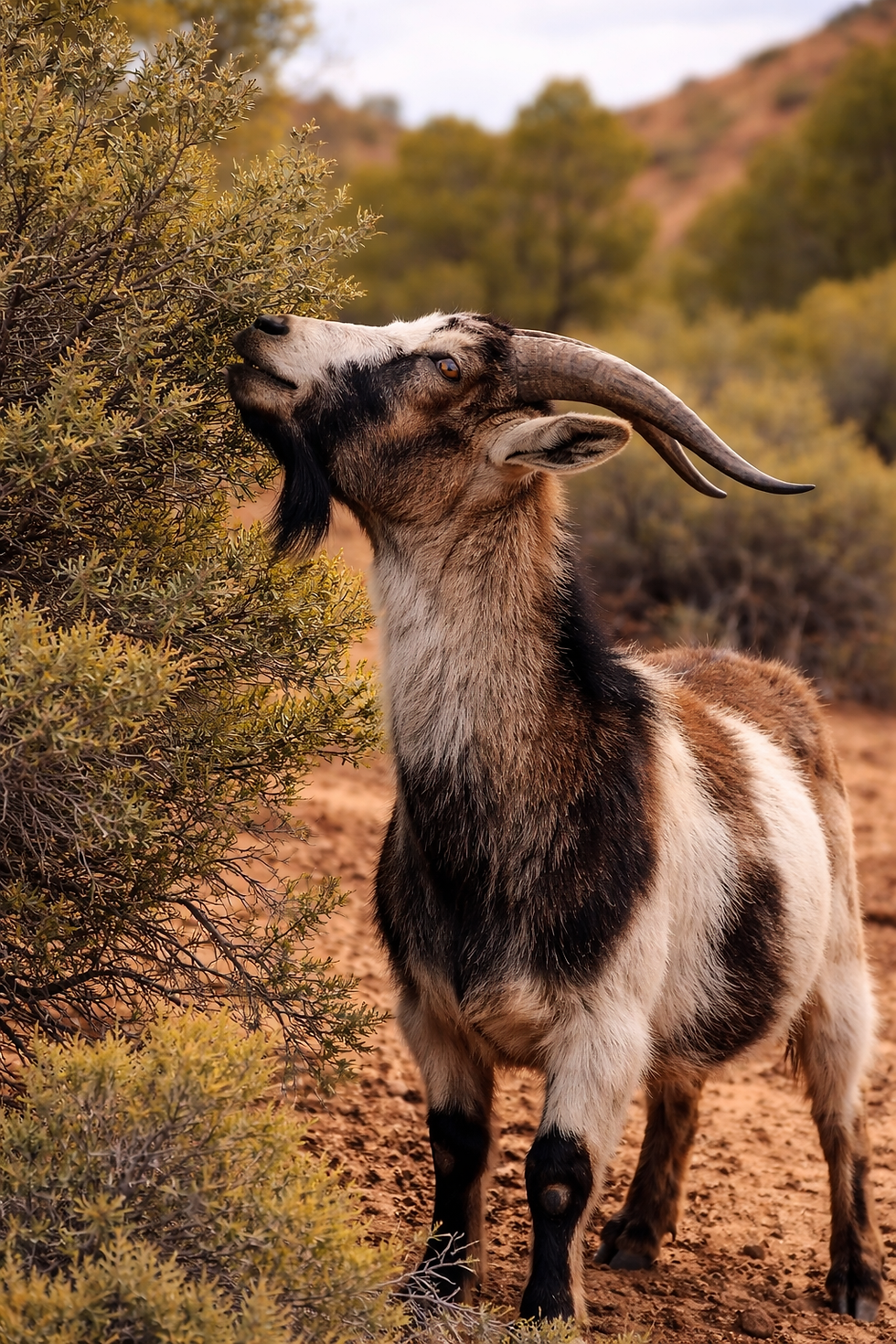
This Friday, Joe Dickie and I will drive west from Denver, across South Park, over Trout Creek Pass, and down into the valley the locals call Salida.
We are going back to a ranch.
Not just any ranch — but the one where a young man named Fred Provenza once flood-irrigated hay by hand, moved cattle on horseback to 11,000 feet, and learned to know the range long before he learned to write a scientific paper.
Today, Dr. Fred Provenza is a Professor Emeritus at Utah State University. He is the author of Nourishment, and co-author of The Art of Shepherding and Hoofprints on the Land. His research has helped reshape how we think about livestock nutrition, plant diversity, and the hidden intelligence of animals.
But before the science — there was Henry.
Henry DeLuca never finished grade school. He did not speak of phytochemicals or adaptive grazing systems. He spoke of seasons. Of water. Of wind. Of where the cattle would likely drift when turned onto a new pasture.
The herd did not move as one indistinguishable mass. It spread across the mountain in extended family groups. You had to know the canyons. Know the benches. Know where to look.
Henry knew.
Fred learned there that animals are individuals. That landscapes hold memory. That health — whether of land or livestock — is born of relationship.
Years later, research would confirm what that ranch already knew: that animals balance nutrients when given diverse forage; that they learn from their mothers; that plant diversity matters; that grazing done with attention can nourish land as much as land nourishes animals.
But none of that knowledge floats free of place.
It began on that mountain.
The ranch is no longer whole.
What was once one working place is now divided. A third sold. Houses built where cattle once grazed. Fence lines marking not just property but change.
It is not just this ranch.
Across the West — across rural America — mid-sized farms and ranches have thinned. Some consolidated. Some subdivided. Some simply faded. The middle hollowed out.
Henry used to say there was never much money in ranching. That has not changed. What has changed is the pressure — land values, debt, fragmentation, distance between those who live on land and those who consume what it produces.
When land fragments, something else fragments with it.
Memory.
Knowledge.
Belonging.
Today we speak of regenerative agriculture as if it were a technique — something to be implemented, optimized, scaled.
Standing where cattle once moved by horseback, you begin to suspect it is something quieter.
You cannot love what you do not know intimately.
Fred said that recently. It stayed with me.
On that ranch, irrigation was done by hand. Cattle were moved by people who knew them. Grazing systems were designed with plant health in mind, though no one used that phrase. There was rest and recovery. There was attention. There was presence.
There was intimacy.
Modern livestock nutrition research now confirms what lived experience suggested: animals given diverse plant communities can regulate their own intake, self-medicate through plant
compounds, and adapt culturally to landscapes. Soil, plants, animals, and people form a nested set of relationships — each shaping the other.
But you do not learn that first in a lab.
You learn it by watching cattle disappear over a ridge and knowing where they will reappear.
---------------------------------------------------------------------------------------------------------------------------
Joe has been talking about filming wind in the trees.
He referenced a documentary where history was told not through archival footage but through the sound of prairie grass. You do not need to show the past if you can let the place speak.
Fred remembers September on that mountain. Elk bugling. Bulls gathering harems. Cattle spreading across alpine benches. The long descent before winter.
We will not recreate those scenes.
But we will stand where they happened.
Fred is 75 now. He still skis. He still reflects. When he talks about that ranch, there is less of the professor and more of the boy. The mountains have a way of stripping away titles.
There is something about returning to a place that formed you. Something that bypasses argument and goes straight to the chest.
We do not go to extract content.
We go to listen.
To see how livestock nutrition connects to plant diversity.
How plant diversity connects to soil.
How soil connects to community. How community connects to meaning.
We will walk the ranch.
We may drive up the mountain.
We may sit inside the old house and talk.
It will unfold as it should.
---------------------------------------------------------------------------------------------------------------------
If you would like to revisit earlier conversations with Fred Provenza before we share what comes next, you can listen here:
· Tap Into the Hidden Wisdom of Livestock to Restore Your Land https://www.growingresiliencesd.com/podcasts/episode/1b03b2a9/71-tap-into-the-hidden-wisdom-of-livestock-to-restore-your-land-with-renowned-ecologist-fred-provenza
· Fred Provenza’s Top Tips for Unlocking Livestock and Land Potential https://www.growingresiliencesd.com/podcasts/episode/2a6231c1/ecologist-fred-provenzas-top-tips-for-unlocking-livestock-and-land-potential
· Reimagining Agriculture: Rethinking Our Relationship with Nature and the Land https://www.growingresiliencesd.com/podcasts/episode/e3298d4b/reimagining-agriculture-dr-fred-provenza-on-rethinking-our-relationship-with-nature-and-the-land
We will share reels from the visit in the coming days.
For now, we head toward the mountains.
Visit these “Growing Resilience Through Our Soils” information pages:
1. Podcast page for drought planning fact sheets, Q&As, news, podcasts, and more.
2. Video page to watch videos of other ranchers’ journeys toward improved rangeland/pasture.
3. Follow Growing Resilience on social media:
4. Our homepage: www.growingresiliencesd.com


The overall experience on this platform feels smooth and well-designed because everything is arranged properly for online users. I liked how naturally users can explore different areas because navigation remains responsive throughout browsing sessions. The pages load efficiently, and the interface performs reliably across multiple devices during use. The clean appearance also improves usability online. Overall, it provides a practical, modern, and beginner-friendly environment suitable for regular online activities.
ok win game login